
7 Steps for Expert M&A Valuation Indonesia
The M&A market in Indonesia has become one of the busiest deal markets in Southeast Asia with a broad package of consumer goods, digital platform, natural resource, healthcare and financial services. Nevertheless, in spite of this, M&A valuation in Indonesia is one of the professionally most challenging fields in the country which is informed by local accounting practice, regulatory auditing by the OJK and the local market forces that are significantly different to more liquid market economies elsewhere.
An incompetently performed valuation does not only have an impact on the results of the negotiations. It leads to audit qualification, regulatory latency, post-closing conflicts and in the listed company environment, potential OJK investigation. You may be a finance professional who is preparing your first acquisition model, a CFO who is assessing a strategic target, or an adviser who is developing deal execution capacity, it is necessary to understand the entire M&A valuation process in Indonesia.
This paper takes a guided tour through the seven key steps of expert valuation of M&A in Indonesia- deal scoping to final compliance reporting- that combine company valuation methods, purchase price allocation services, and PSAK/IFRS standards into one, workable system.
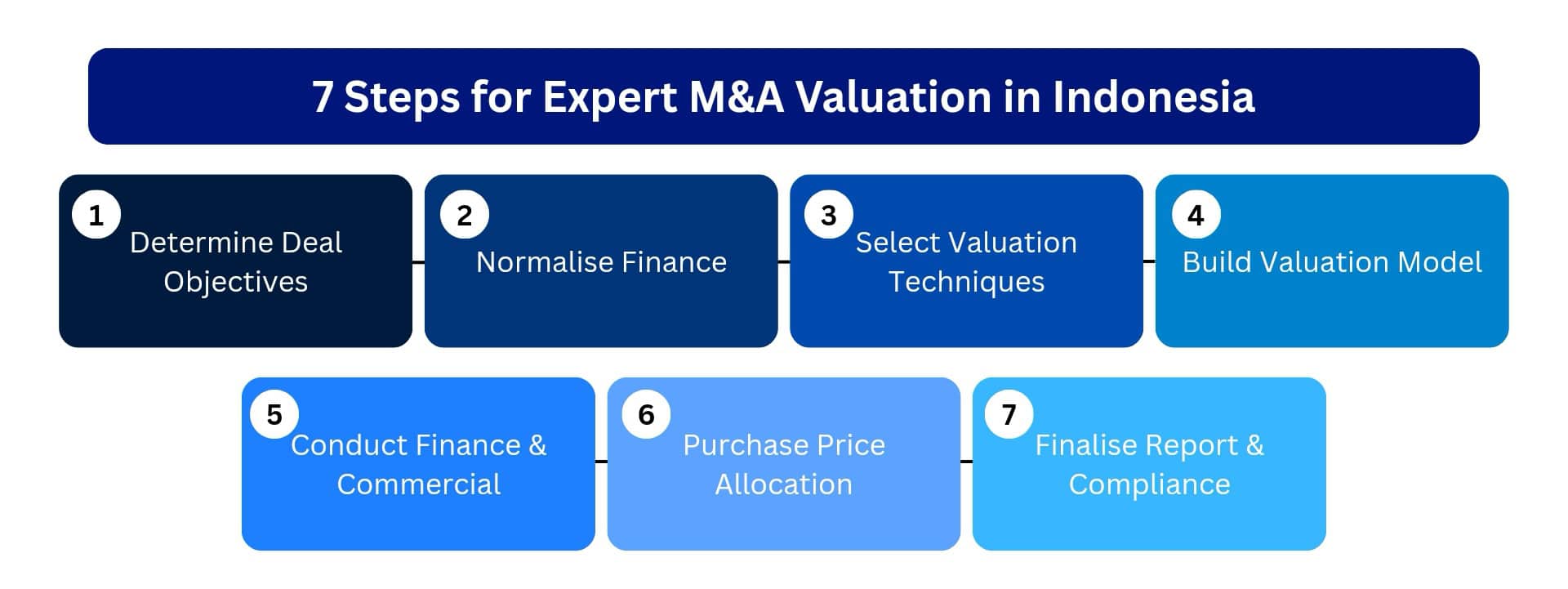
Figure 1: The 7 Steps for Expert M&A Valuation Indonesia
Key Concepts: Understanding Valuation for M&A in Indonesia
It is necessary to develop a clear conceptual base before going through the seven steps. M&A valuation in Indonesia is an estimation of the economic value of a target company- or particular assets of a target company- to use when making decisions regarding the price to be paid or received in a transaction, deal formation, regulatory reporting, or post-acquisition financial reporting.
There are a number of interlocking standards and regulatory requirements governing the Indonesian framework approach to M&A valuation:
- PSK 22 ( Business Combinations / IFRS 3): the acquisition method is obligatory, and all identifiable assets and liabilities have to be measured at fair value on the acquisition date and any remaining amount must be considered as a goodwill.
- PSAK 68 ( Fair Value Measurement / IFRS 13): defines the concept of fair value and the hierarchy of three levels of inputs, with Level 3 disclosures of the inputs that cannot be observed in active markets being extensive.
- PSAK 48 (Impairment / IAS 36): regulates the post-acquisition goodwill impairment testing, which establishes a continuum valuation beyond the end of the closing.
- OJK Regulation No. 35/POJK.04/2020: sets out independent valuation of material transactions, mandatory tender offer and related-party transaction of listed companies.
- Meanwhile, as required by the Ministry of Finance licensing (KJPP): the public appraisers involved in the valuation of transactions controlled by OJK must have an active registration of the Ministry of Finance.
Knowledge of the standards that are applicable to a certain transaction and at what point, decides the methods of valuation that should be used and the extent of documentation that should be provided in the final report.
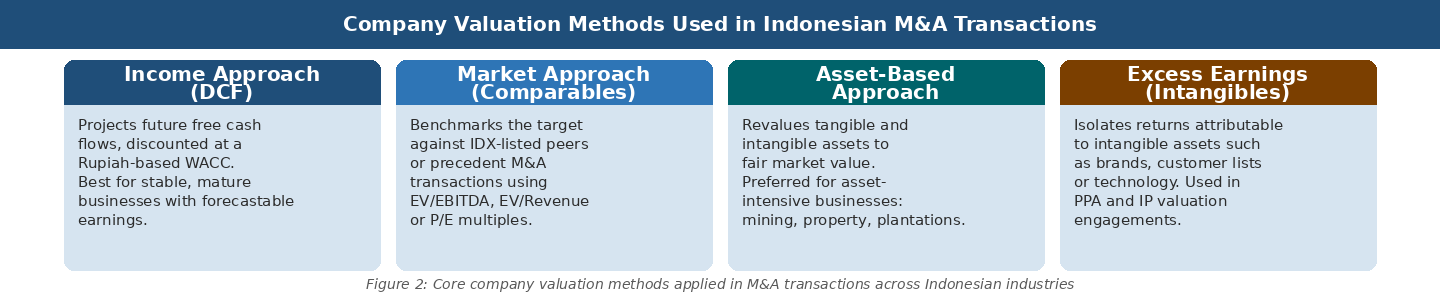
Figure 2: Core company valuation methods applied in M&A transactions across Indonesian industries
Why M&A Valuation Matters in the Indonesian Market
The features of the deal market of Indonesia are such that rigorous valuation is inflicted particularly in consequence. The mid-market is dominated by family-owned conglomerates, capital markets are becoming increasingly deep but not yet comprehensive enough to be fully liquid and a high percentage of business value is held in assets such as brands, distribution networks, land holdings, commodity concessions, which are never recorded in a PSAK balance sheet until an actual transaction is made.
To the buyers, this poses risk: with no detailed valuation, one can easily pay more than intangible value that is hard to keep after acquisition, or overlook liabilities that cannot be found in audited financial reporting. To sellers, it provides opportunity: a trusted separately supported price is used to anchor the ask and minimize negotiation weaknesses. To both parties, the post-closing financial accounting liabilities, purchase prices allocation, goodwill recognition, and testing of impairments over the next several years, provides a joint report commitment that starts once the deal is closed.
The growing examination of the transaction disclosed by listed companies by the OJK presents a regulatory aspect. Valuations that do not withstand independent review both by auditors and by the regulator put companies at risk of restatement and enforcement as well as reputational loss. Valuation which is done correctly in the beginning is categorically more efficient than having to fix it during audit or under regulatory pressure.
The Indonesia specific valuation issue:
Much of the business value in Indonesia is found in assets that have not been formally appraised: brand names built by the founder, informal distribution channels and an unregistered land claim. Having an exhaustive M&A valuation in Indonesia requires finding and measuring this hidden value as much as using conventional financial models to the reported figures.
Key Benefits of a Structured M&A Valuation Approach
Organizations that go through an orderly valuation process with seven steps always record higher results compared to those that see valuation as a box-ticking activity. The advantages are realized at all deal lifecycle levels.
Better-Informed Negotiation
A systematic valuation process does not result in prices that are defensible at one point only. Knowing the extent of reasonable values, and the suppositions which guide them, allows the buyer and the seller a principled, rather than an intuitive, basis to negotiate. This clarity is quickening agreement in the Indonesian transactions where the difference in the expectations of the buyer and seller price is usually large.
Less Post-Closing Surprises
Due diligence combined with valuation process, and specifically the quality of earnings analysis and identification of off-balance-sheet liabilities will decrease the likelihood of finding material post-closing problems. Unregistered land encumbrances, informal employee arrangements and transfer pricing exposures are often not disclosed in the off-balance-sheet in Indonesian transactions, which are often only discovered when inquired about.
PSAK / IFRS Compliance Day One
By engaging in the valuation process prior, not after, closing, the valuation team will be able to design the PPA process architecture in advance, align with the audit team in the initial period, and prepare a compliant opening balance sheet in the PSAK 22 measurement period. This lowers audit strain, avoids qualified opinion and renders the initial consolidated financial statements of the acquiring entity to depict a proper economic image of the acquisition.
Better Investor/Lender Confidence
In the case of acquisitions that have been funded by bank debt, issuance in the capital market, or institutional equity, the lenders and investors need to be supported by credible valuation. Independently prepared, IFRS-quality, valuation report, prepared by a well-known Jakarta-based company, is an indicator that governance is mature and cost of capital in relation to information asymmetry is less expensive.
The Practical Applications of 7 Steps for Expert M&A Valuation Indonesia
The steps that follow are the ordered plan followed by professional practitioners in performing valuation in the context of M&A in Indonesia, starting with the first step, which is the analysis of the deal, and goes further to the last stage of the process, the post-closing financial reporting.
Step 1: Determine Deal Objectives and Deal Scope
All M&A valuation begins with purpose. Is this a purchase-side valuation to make an offer price? An anchoring sell side exercise? An opinion of fairness in favor of the independent directors of a listed company? Or a post-closing PPA of the financial reporting? All purposes assume various methodology requirements, independence criteria and format of deliverables.
The scope definition phase in the Indonesian deal must also be used to confirm what type of regulatory approvals are needed OJK notification, KPPU merger control clearance, or BKPM foreign investment sign-off as they vary on the timing and documents needed and can impact the deal structure and the valuation mandate.
Step 2: Normalise Financial Statements of the Target
The Indonesian target companies, especially family-owned corporations, often have financial statements which need a lot of normalization before they give a valid ground to rely on in valuation. There are typical corrections, such as (1) to remove one-off (asset disposals, litigation settlements), (2) to reverse related-party transactions done at terms other than at arm-length, (3) to reflect the compensation of the owner (compensation more or less than market rates), and (4) to restate PSAK to full IFRS (where the acquirer or its investors need to receive IFRS-quality information).
This normalisation phase is analytically more intense in Indonesia as compared to more institutionally controlled markets. It involves the close examination of the accounting policies, the management accounts of the target, and preferably two to three years of audited financial statements and management information which portrays the reality of operational operations.
Step 3: Choose the Ideal Company Valuation Techniques
Selecting the right company valuation methods is the technical centrepiece of the exercise. Indonesian M&A practice has three major approaches namely, income approach, market approach and asset based approach, all applicable to various types of businesses and circumstances of the transactions.
- The income method (DCF) appraises the business by discounting estimated free cash flows in Rupiah-denominated WACC. It is the favored leading technique in case of a business where cash flows are stable and predictable: toll roads, power plants, manufactures of consumer goods and well-established healthcare networks.
- The market approach compares the target to listed Indonesian peers (IDX comparables) or previous transactions in the industry via M&A but with size, liquidity, and control multiples of EV/EBITDA, EV/Revenue or Price/Earnings. Digital and high-growth companies with limited earnings can use EV/GMV or EV/subscriber ratios as an addition to conventional multiples.
- The asset-based method revalues the tangible and intangible assets of the target to fair value, thus it is best used by large asset-intensive businesses: mining concessions, plantations land banks, investment property portfolio, and holding companies that list the subsidiaries.
Practically, the majority of M&A value in Indonesia are implemented by employing at least two approaches and with the findings as a cross-check. Where there is a material difference between the inferences drawn by the income and market approaches, the difference itself is informative–it usually indicates differences between the growth assumptions made by the management and what the market is today willing to price to similar business.
Step 4: Build the Valuation Model
The valuation model is then built after the methodology is confirmed. In the case of DCF-based appraisals, it would entail developing a five-year financial model based on the normalised base, estimating revenue, margins, capital expenditure and working capital and developing a Rupiah-based WACC bottom up. The derivation of WACC must employ the Indonesian Government Bond yield as the risk-free rate, a country and equity risk premium that is tuned to the market risk in Indonesia, a beta which is based on IDX-listed or regional sector comparables and a size premium where suitable.
Sensitivity analysis is not a bonus, it is an obligatory part of any plausible Indonesian M&A valuation. The model must at least demonstrate the variation in the valuation conclusion to reasonable variations in the discount rate, the terminal growth rate, and the most significant operational variable of the particular business. It is this sensitivity output that defines the transaction negotiation range and after closing, the PSAK 68 disclosure requirement of Level 3 input.
Step 5: Conduct Financial and Commercial Due Diligence
Both due diligence and valuation are interdependent processes. Financial due diligence checks the legitimacy of the normalised earnings base upon which the model of valuation is constructed; commercial due diligence checks on the viability of the revenue and market assumptions encoded in the projections. The due diligence exercise in the Indonesian transactions ought to address in particular several risks that are more common in this area compared to other market.
- Intragroup transactions at non-arm length prices that expose the company to transfer pricing risk that may result in significant tax position not reported in audited accounts.
- Risks in documentation of land and property such as certificates in personal names of founders, encumbrances or classification of land rights (HGU, HGB, SHM) which impact value and transferability.
- Benefits and employment obligations such as the entitlement to pension-like gratuities under UU Ketenagakerjaan which are not necessarily fully provisioned.
- Environmental and regulatory risks, especially mining, plantation and manufacturing whereby the remediation responsibility might remain unreported or understated.
Step 6: Carry out Purchase Price Allocation
When a transaction is closed, the acquiring entity will have to make a Purchase Price Allocation under PSAK 22. It is at this point that purchase price allocation services come in: the PPA apportions the entire consideration paid as between the fair values of identifiable assets and liabilities, and any remaining portion is considered goodwill. The PPA should be filled in a period of twelve months upon the date of the acquisition.
Indonesian M&A deals normally present an intangible asset which the target has never recorded before; brand names, relationships with its customers, distribution channels, technology platforms and non-compete agreements. Both should be assessed by a proper method and their useful life should be determined to be used in their amortisation. The PPA structure establishes the form of goodwill on the acquirer balance sheet and the post-acquisition amortisation expenses that transfer through its income account- it is one of the most significant technical exercises in the whole process of the deal.
The external auditors of the acquirer will pool resources with the experienced purchase price allocation services providers in Jakarta in the PPA process, distributing draft intangible asset schedules and methodology documentation prior to completion ensuring that disputes which block the post-acquisition financial statements are avoided at the late stages.
Step 7: Finalise the Valuation Report and Ensure Compliance
The last process is to prepare a valuation report which addresses the needs of all those interested, which include the audit team, the OJK (where listed company transactions are relevant), lenders or interested investors, who need IFRS quality information, and even the internal governance requirements of the acquirer. A quality Indonesian M&A valuation report would have fully documented methodology section with all Level 3 inputs clearly described with backing evidence, sensitivity analysis to show how strong the findings are and disclosure-ready summary that can be included in financial statement notes.
In a case of the transactions of listed company that are subjected to OJK reporting, the report shall be prepared by a licensed KJPP or OJK-recognized valuation firm. The person verifying the valuation must be licensed and has a proven record of reports accepted by OJK before they are engaged rather than after the report has been prepared.
Best Practices for 7 Steps for Expert M&A Valuation Indonesia
Firms and finance specialists that have gone through numerous Indonesian M&A deals are able to establish a set of similar practices that define successful valuation assignments and problematic ones.
- Get it prepared early: do not sign and order the valuation adviser to do the valuation, commission him/her to do it. The deal pricing, representations and warranties, earn-out structuring, are all subject to valuation findings and have to be dealt with prior to the deal closing.
- Advise auditors: discuss the proposed valuation model with the external auditors of the acquiring entity prior to the development of the model. Disputes over methodology solved at scoping stage are a fraction of those solved when a draft report has been made.
- Determine a local Indonesian WACC: do not use a USD discount on cash flows on IDR cash without currency adjustment. This one mistake is the main reason of exaggerated recoverable amounts and lateness to recognize impairment in Indonesian financial reporting.
- Assure that KJPP is licensed: in case of a transaction controlled by OJK, ensure that a current license issued by the Ministry of Finance KJPP to the appointed valuation firm with appropriate authority over the asset type is present. A report that has not been licensed will be cancelled making a full restart a time-consuming task.
- Maestro PPA: make it an integral part of the deal, rather than an after-thought: start scoping the PPA exercise prior to closing, recognise the intangible assets that will need to be valued, and brief the acquirer management about the accounting implications of the transaction, especially the amortisation charges of identified intangibles, before the transaction is signed.
Table 1: M&A Valuation in Indonesia — Steps, Standards, and Key Outputs (7 Steps for Expert M&A Valuation Indonesia)
| Step | Activity | Relevant Standard | Key Output | Who Involved |
| 1 | Deal scoping & objective setting | OJK POJK 35/2020 | Engagement scope letter | CFO, Legal, Valuer |
| 2 | Financial normalisation | PSAK / IFRS restatement | Normalised EBITDA bridge | Valuer, FDD team |
| 3 | Method selection | PSAK 68 / IFRS 13 | Methodology memo | Valuer, Auditor |
| 4 | Model construction | PSAK 68; WACC policy | DCF / comparables model | Valuer, Finance team |
| 5 | Due diligence | Regulatory & tax review | DD findings report | Legal, Tax, Valuer |
| 6 | Purchase Price Allocation | PSAK 22 / IFRS 3 | PPA schedule; opening BS | Valuer, Auditor |
| 7 | Final report & compliance | OJK; PSAK 48 disclosures | Valuation report; notes | Valuer, Auditor, OJK |
Source: Compiled from PSAK/IFRS requirements and Indonesian M&A advisory practice.
Common Challenges and How to Address Them (7 Steps for Expert M&A Valuation Indonesia)
Even seasoned deal teams are faced with regular barriers when undertaking M&A valuation in Indonesia. The foreseeable nature of such challenges alleviates the effect that they will have on the deal timelines and the quality of financial reports.
Information Quality and Availability
A significant number of Indonesian M&A targets, especially those in the mid-market and family-owned companies, have failed to keep up with financial records that are maintained by institutional buyers. Related-party transactions might also distort the true operating performance, management accounts might not be consistent with audited statements and historical capex might be undercapitalised. The remedy is to construct the normalisation step early and explicitly, and to order a quality of earnings analysis to be completed as a condition to the further development of the valuation model not as a supplement.
Identification and Valuation of Intangible Assets
Discovery and asymmetric recognition of the intangibles which need to be documented in a PPA are always the most analytically complex aspects of Indonesian M&A valuation. Resistance to intangible identification Asset: The founders and sellers frequently oppose intangible identification on the basis that it will raise post-acquisition amortisation costs – decreasing reported earnings of the acquired business. Training the management to understand the logic of accounting, as well as why PSAK 22 compliance is not a choice as an option but mandatory, is a relationship management issue and a technical one.
To the valuation team, this poses as a challenge to build strong models on the assets with limited or no direct comparable market information available. The relief-from-royalty models of the Indonesian brands, the multi-period excess earnings models of customer relationship in niche markets and with-and-without models of distributor agreements all involve heavy judgment and documentation. The involvement of a firm that has proven experience in the valuation of Indonesian intangible assets and not one that has approached PPA as a routine financial modelling project is a material variance to the quality and auditability of the result.
Auditor–Valuer Alignment
The most frequent causes of delayed financial statement issue under Indonesian M&A are post-closing disagreement of the independent valuation team and the external auditors of the acquiring entity on the PPA methodology, discount rates or useful life of intangible assets. The best mitigation is a formal pre-fieldwork alignment procedure: discussing the outline of the methodology with the audit team, elaborating the main principles prior to the construction of the model, and keeping an open line of communication during the engagement.
Regulatory Timeline Management
In the case of listed companies, requirements by OJK serve to impose procedural schedules, which have to be planned in advance and not responded to. Valuation reports regarding the mandatory tender offers, material transactions, and the dealings involving the related parties should be provided within the timeframes suggested in OJK. Failure to meet such deadlines due to getting a valuation engagement too late or a disagreement between methodologies can generate penalties, delay transactions or in rare instances necessitate the rescission of the transaction.
Summary: M&A Valuation Excellence Building in Indonesia (7 Steps for Expert M&A Valuation Indonesia)
The professional valuation of M&A in Indonesia is more than financial modelling skills to implement. It requires an understanding of local regulatory demands, standards of PSAK/IFRS methodology, local market forces and the ability to bring together the multiple stakeholders- auditors, regulators, sellers, buyers and lenders on a shared analytical platform.
The steps of the proposed deal scoping to final compliance reporting, comprising seven steps in this article, are a validated and unified strategy of Indonesian valuation of M&A. Firms and finance practitioners that pursue the process are always able to attain superior deal results: improved pricing, expedited clearance of the audit process, cleaner financial reports and enhanced confidence in the capital markets participants upon which they will rely on in future dealings.
Every M&A valuation project in Indonesia must be driven by three aspects. First, start early: the valuation process needs to be initiated as early as the legal and financial due diligence, and not once the signature is signed. Second, invest in rigour: a valuation report is good because of its assumptions and documentation, and not because of the sophistication of the model. Third, design to comply: all the valuation products must be designed initially as resistant to audit examination and OJK scrutiny, not modified to that effect after the initial version has already been criticized.
The standard of M&A valuation can only continue to go up as the deal market continues to evolve in Indonesia, with the transactions being larger, the counterparties being more experienced, and the best integration with the international capital markets. The experts and consultants who invest in the development of real expertise today will be well placed to bring value in the dealings that will characterize the next ten years of Indonesian corporate growth.
M&A valuation estimates the fair value of a business involved in a merger or acquisition to support pricing, negotiations, and investment decisions.
The process typically begins with understanding the transaction, gathering financial information, and defining the valuation objectives.
Professionals commonly apply the Discounted Cash Flow (DCF), Market Approach, and Asset-Based Approach depending on the transaction and available data.
Professional valuation provides objective analysis, supports fair negotiations, identifies risks, and improves confidence throughout the transaction process.
Business owners, investors, corporate buyers, financial advisors, lenders, and shareholders all benefit from reliable M&A valuation reports.